
A new kind of heat exchange
FLEX™ re-engineers how heat moves between fluids, so low-cost, energy-dense materials can store cooling efficiently. It's the foundation for high-return thermal storage in data centers and HVAC.
How FLEX works
How FLEX moves heat
It's a battery for cooling. You store cooling, then use it when you need it. FLEX moves heat between two immiscible media (think oil and water). The flow of the working fluid into and out of the tank is engineered to either freeze or melt the storage material, charging or discharging the battery. That flow-driven heat transfer allows low-cost, energy-dense materials to maintain performance over time and through repeated cycling.
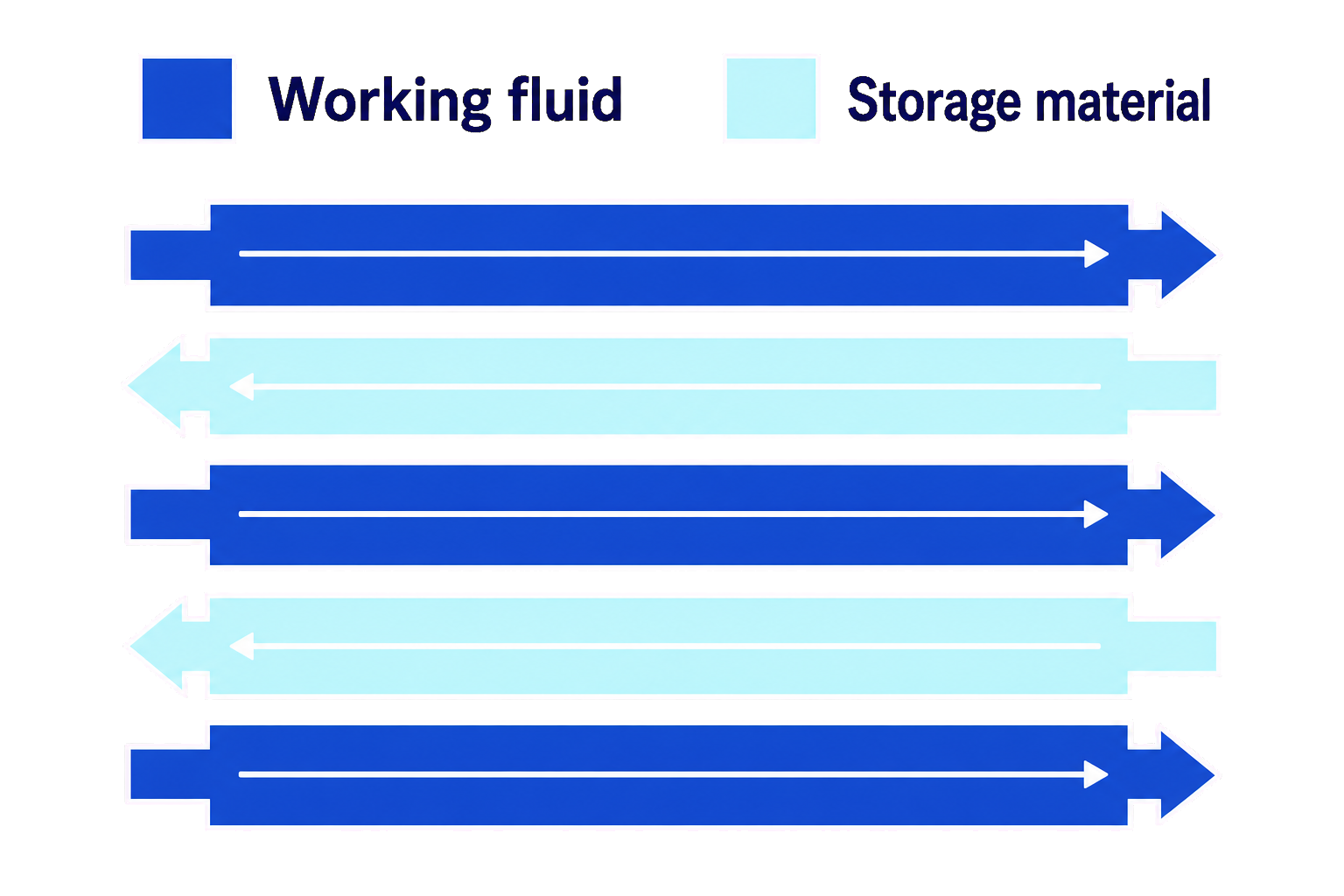
Heat exchange
Two immiscible media move in separate paths
→
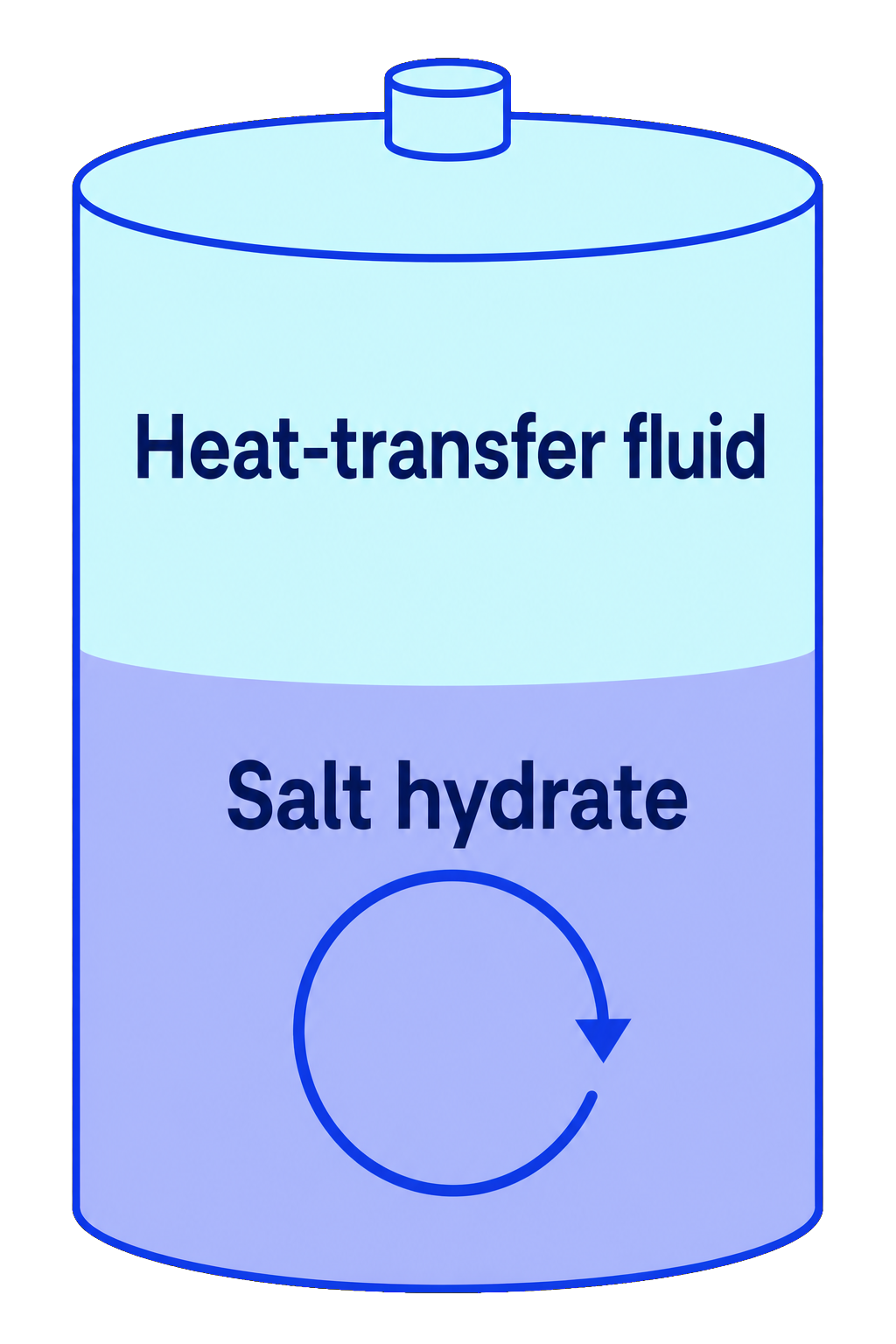
Thermal storage
Flow agitates the material without emulsifying it
→
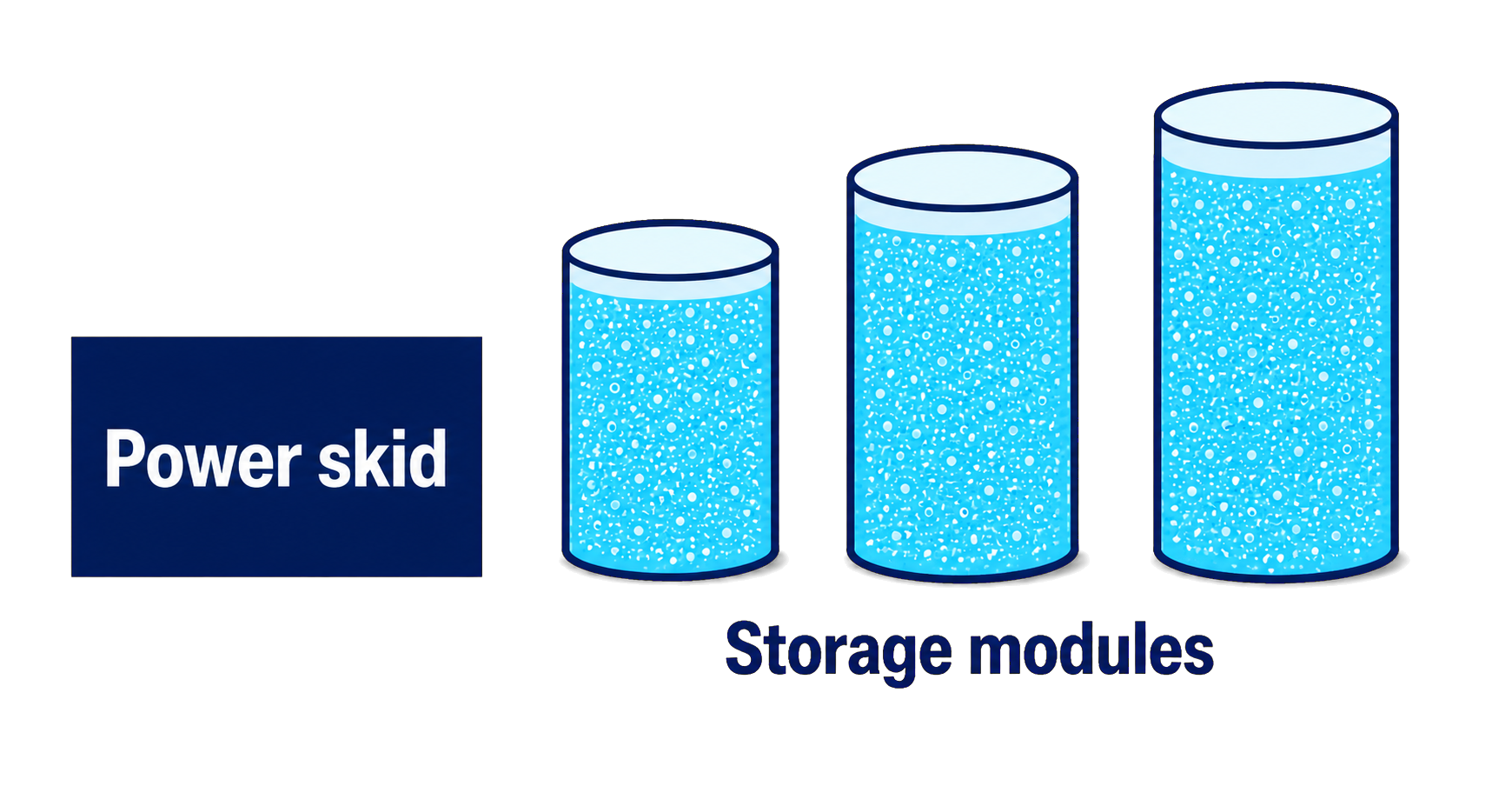
Modular scale
Modules added in parallel
Energy-dense storage from low-cost materials

Uses low-cost salt hydrates

High energy density

Standard parts throughout, no specialty components
Modular architecture enables projects to scale at minimal marginal engineering cost.
Deployed and patented
FLEX is field-deployed in HVAC today. The data center model is designed and built from this foundation, with validated prototypes, paper studies, and in-house modeling for hyperscale and edge data center sites. The technology is protected by patents and know-how developed over years of iteration.
The engineering behind
FLEX
We can take you through the materials science and test data in depth.
Request an intro call